Friday, November 16, 2018

Monday, October 29, 2018

Sunday, October 28, 2018
Permaculture and Organic Fertilizer Production Center
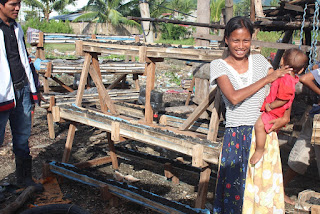
Today, thanks to the German Embassy in Manila, we are starting to construct the Permaculture and Organic Fertilizer Production Center in Sitio Mahangub, Lubilan, Naawan, Misamis Oriental. The center will serve the training needs of farmers in the area. Mabuhay!


Thursday, October 25, 2018
Greetings. May I post the biodata of our long-time partner starting with a youth organization called Association of Locally Empowered Youth in Northern Mindanao...
Curriculum Vitae
Full Name: Michelle Frances Sayre Uy
Tel: 09062580387
Address: Bliss, Initao, Misamis Oriental, 9022
Philippines
Email address:
aleynm@gmail.com
Birthday: March 29, 1993
WORK EXPERIENCE
1.
Program In-charge, Youth
Development Program, Water, Agroforestry, Nutrition and Development (WAND)
Foundation (April 1, 2018 to present).
I led in the planning, designing and
implementation of youth development programs of the WAND Foundation. Thematic
areas of youth development include, off and on-farm livelihood promotion, youth
organizing and local leadership development, community-based natural resources
management with emphasis on the promotion of permaculture or farm
diversification initiatives and rural entrepreneurship development. I cover 3
municipalities in Misamis Oriental as well as provide technical advice to our
youth program in Albuera, Leyte which is an on-going disaster recovery food
security program by vegetable gardening with those affected by Typhoon Yolanda. The Leyte project is funded by the Associated
Country Women of the World based in the United Kingdom and the Japan Fund for
Global Environment and one of the component which I co-implement is the Zero
Hunger Campaign.
I also co-manage a crowd-sourcing fund
facility at the DonorSee site in order to access fund to support our various
initiatives. These are mainly small, high impact projects maximum of Pesos
20,000 per project that are easily funded and quickly implemented. Once
projects are implemented, I led in the conduct of monitoring and evaluation in
order to make sure that projects are sustained beyond initial phase.
2.
Field Officer, Youth
Development Program, Water, Agroforestry, Nutrition and Development (WAND)
Foundation (June 1, 2014 to August 30, 2016).
I assisted in the implementation of
youth development programs of the WAND Foundation mainly in Misamis Oriental
and in Leyte with the bulk of the projects in Leyte related to our disaster
recovery response after Typhoon Yolanda. The WAND Foundation maintain a
permanent office in Albuera, Leyte after Typhoon Yolanda in late 2013. The
youth development programs I assisted was mainly on vegetable gardening as a
tool for food self-reliance and nutrition and income improvement. In Misamis
Oriental, the youth development initiatives that I assisted include vegetable
gardening for food security, direct assistance to youth-managed livelihood
projects mostly on on-farm activities such as the raising of small animals,
organic fertilizer production and charcoal making.
I also helped supervise the
establishment of 3 Learning Farms, namely, Mahangub Highlands, E&C Gardens
and the Libertad Organic Farm. The farms are located in the Municipalities of
Libertad, Naawan and Manticao. One of
the farms, the Mahangub Highlands is now accredited with the Technical
Education Skills Development Authority (TESDA) as a vocational school licensed
to offer trainings on organic chicken production, care and management of small
ruminants, organic fertilizer production and vegetable production.
3.
Co-Founder and Co-Manager and
at present Adviser/Volunteer, Association of Locally-Empowered Youth-Northern
Mindanao (ALEY-NM). May 2010 to present.
Initially, I
co-founded and co-managed the day to day operations of the ALEY-NM and
presently acting as Adviser/Volunteer. ALEY is present in 3 provinces in
Northern Mindanao and in Leyte. Most of our staff are trained volunteers being
provided with living allowance by the Philippine National Volunteer
Coordinating Agency.
Some of the
projects that I designed and co-managed include the following;
a.
Disadvantaged Urban Youth
Entrepreneurship, Organic Vegetable Production, Food Processing and Marketing
Project funded by the UN-Habitat and implemented in the cities of Dapitan and
Dipolog. The project focused on
producing vegetables using vermi-compost, simple hydrophonics and containers,
food processing and marketing the product and then organizing the beneficiaries
so that they are able to manage, sustain and expand the best practices with the
objective of locally empowering them so
they are able to chart their destinies via improved entrepreneurial and
personal competencies, resilient food security and organization development. A
total of 420 youths participated in the project.
b.
Use of human waste in for
small-scale vegetable gardens and tree planting activities. This was my
national award from the Ten Accomplished Youth Organizations or TAYO with the
award I used to promote and expand the project.
c.
Providing vegetable gardening
as food security support for home-based evacuees affected by the Marawi City
crisis and residing with their relatives and friends scattered in villages in
Misamis Oriental. I provided advice and volunteered on my free time the
implementation of this project.
d.
Together with Jed Christian
Sayre, I co-lead in the implementation of the training program, “Youth-Led Environmental Improvement Project through
Permaculture(YLEIPP) for youth leaders in 2 provinces in Mindanao funded
by the Young Southeast Asian Leaders Initiative (YSEALI). A total of 102 youths
participated in the training program.
Other Activities:
Entrepreneur,
Michelle’s Food and Health Products. I purchase farm products grown by local
farmers and process these products into high-end tea, juice, herbal drinks,
spices and organic coffee and market these in local and provincial markets. The
link to my presentation is found in, https://www.youtube.com/watch?v=tqtW50RuEFo&feature=youtu.be.
I was able to attend the YSEALI Regional Workshop on May 13-18, 2018 at Inle
Lake, Myanmar in order to improve my entrepreneurial capacity. The LUSH Cosmetics supported me with a grant
to scale-up processing and marketing of the products.
Publications (Contributor/Researcher):
a.
Association of
Locally-Empowered Youth in Northern Mindanao EcoPee, Rain and Grey-water
Conservation Project and Vegetable Gardening Initiative. Water and Solid Waste
Newsletter. German Technical Cooperation, Manila.
b.
“ALEY-NM successfully
implemented a project funded by the Japan Water Forum Fund”. Water and Solid Waste Newsletter. German
Technical Cooperation, Manila.
c.
“Promoting Ecological
Sanitation via the Philippines 21 Young Leaders Initiative. Water and Solid Waste
Newsletter, August 2010. German Technical Cooperation.
d.
“Giya unsaon pagtanum ug mga
pagkaon ug mga kahoy ginamit ang Sustainable Agroforest Land Technology nga
sistema” (Guide in implementing sustainable agroforest land technology
system).” 25 pages.
e.
“Sustainable Small Vegetable
Gardening Training Manual for Urban Youths.” 18-page brochure used in the urban
youth gardening project.
International Travels:
a.
Australia - October 15-28, 2007. Field exposure, visited
Australian National University in Canberra and various places in Sydney and
Melbourne.
b.
Thailand – January 15-25, 2007.
Family tour.
c.
Hongkong – June 6-16, 2010.
Family tour.
d.
Burma – May 13-18, 2018. Attend
YSEALI Impact XL.
AWARDS AND
PARTNERSHIPS
Winner, Ten
Accomplished Youth Organization (TAYO 8) in the Philippines. Youth
Small Scale Vegetable Gardening Project.
Grantee, BOTH
ENDS Netherlands, JWH Initiative, Supporting Young Environmental Leaders. Youth
Environmental Leadership Grant. March 1 to July 30, 2018.
Grantee, YSEALI
Impact XL at Inle Lake, Burma. US Department of State.
EDUCATIONAL
BACKGROUND
College : Xavier University, BS Biology, June 2010 –
March, 2013, (6 semesters).
: Xavier University, BS Agriculture, major in
Development Communication, June
2013 – March 2014, (2 semesters).
: Xavier University, AB Literature, June 2016
- March 2018. Graduated.
Location : Cagayan de Oro City, Philippines
Hobbies:
Singing, dancing, writing, hiking.
Saturday, July 7, 2018


Friday, December 18, 2015
Thank you friends for your continuing support
Dear Friends,
Greetings for the Holidays 2015 from WAND Foundation. We continue to make breakthroughs with our work and expanding from our base in Libertad, Misamis Oriental to Zamboanga del Norte and Leyte and Samar. Our work in Leyte and Samar started in the early days when Typhoon Haiyan struck and up until now. In Leyte and Samar, we focus on implementing safe sanitation, food security via vegetable gardening and small-scale agriculture, local livelihoods, education for girls



 and provision of needed supplies. Thanks to so many friends who donated money, goods, time and effort in order to make our work successful. We are proud to say that we are the few local organizations who are still providing much-needed relief to the typhoon survivors. We are geared to do some more initiatives starting early next year.
Our initiatives in Samar and Leyte can best be summed in the article, "harvesting hope" with this link, http://yolanda.dailybruin.com/chapter-3/harvesting-hope/
Again, to all friends and supporters, thank you very much.
Very sincerely yours,
Elmer
Greetings for the Holidays 2015 from WAND Foundation. We continue to make breakthroughs with our work and expanding from our base in Libertad, Misamis Oriental to Zamboanga del Norte and Leyte and Samar. Our work in Leyte and Samar started in the early days when Typhoon Haiyan struck and up until now. In Leyte and Samar, we focus on implementing safe sanitation, food security via vegetable gardening and small-scale agriculture, local livelihoods, education for girls


Our initiatives in Samar and Leyte can best be summed in the article, "harvesting hope" with this link, http://yolanda.dailybruin.com/chapter-3/harvesting-hope/
Again, to all friends and supporters, thank you very much.
Very sincerely yours,
Elmer
Wednesday, March 12, 2014
Jed as our Program Manager for Livelihoods in Leyte
Jed Christian Sayre is deployed as our Program Manager for Livelihoods in Leyte to support survivors of Typhoon Haiyan. He is based in Ormoc City and travels daily to neighboring municipalities. Jed's was graduated from Xavier University in Cagayan de Oro and from the Coady International Institute in Canada. His profile is presented below;


Awards and Partnerships:
a. Fellow, Philippines
21 Young Leaders Initiative. Asia Society Philippine Foundation, Inc. The
fellowship is awarded for his efforts towards the development of an equitable
and just Philippine Society.
b. Winner,
Asia-Pacific Future 100. Most Inspiring Entrepreneurs and Social Change-makers.
2009. One of the most prestigious awards for social entrepreneurs in Asia.
c. Grantee, Idea
Wild, USA. Biodiversity and Youth Rural Improvement Project. November 2009 to present.
d. Grantee, Japan Fund for Water, Japan.
Project to Conserving Water, Promote Ecological Sanitation and Improve Food Security.
August 2009 to February 15, 2010.
e. Co-winner, International Competition on
Integrated Rural Development, Rehovot, Israel, December 2011.
Work Experiences:
a. Program Manager, Local Livelihoods and Sustainable Small-scale Agriculture, Water,
Agroforestry, Nutrition and Development Foundation, Inc. June 2012 to present. Provide organizational, technical and management
support to the promotion of local livelihoods and sustainable agriculture. I also promote and manage youth
entrepreneurial activities in the project areas.
b. Municipal Councilor,
Libertad Municipality. July 1, 2010 to May 30, 2013. I promote agricultural
development and local livelihoods and assist in in Libertad Municipality, Misamis Oriental.
b. Founder and Adviser,
Association of Locally-Empowered Youth-Northern Mindanao (ALEY-NM). May 2007 to
present. Youth empowerment through ecological
sanitation, home-gardening and local livelihoods. I designed the community
development approach of the association, write project proposals, join project
competitions and liaise with prospective partners and supporters.
d. Originator and Proprietor, Jed’s Kofi. January
2008 to present. Jed’s Kofi is locally-made coffee from corn, coffee, moringa
and lemon-grass designed to provide forward-linkage for farm products of small
farmers at the same time employing local women in the production process.
e. Co-founder,
Ecosan Club Philippines. April 2009. The
Ecosan Club promotes ecological sanitation and the safe re-use of human waste
in agriculture and small-scale forestry in order to close the loop between
agriculture and food consumption.
Subscribe to:
Posts (Atom)